
Grocery and discount retail are becoming the 1031 buyer’s comfort trade
A 1031 buyer rarely says the quiet part out loud.
He is not just looking for yield. He is looking for a replacement property he can explain to himself, to his spouse, to his lender, and eventually to his heirs without needing a heroic operating story.
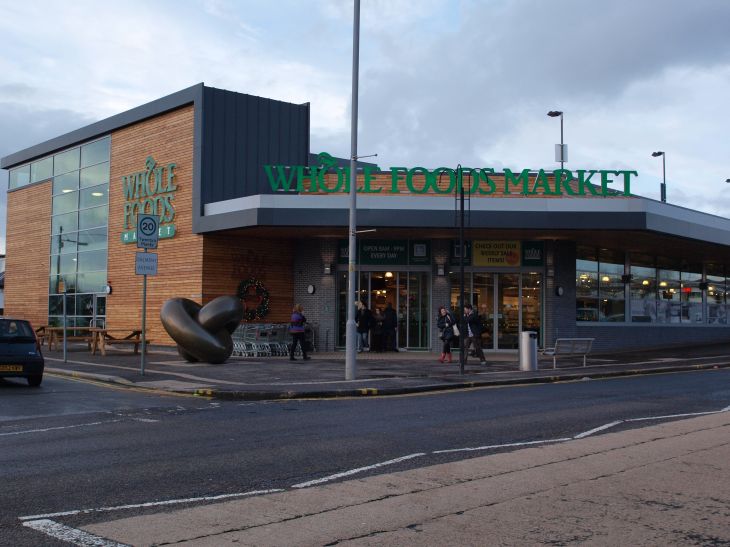
That is why the newest retail investor-demand signal matters. Chain Store Age’s coverage of JLL’s 2026 U.S. Retail Thematic Outlook and Investor Survey reported that more retail investors expect to increase acquisitions than sales this year, that retail has reached its highest share of U.S. sector investment in a decade, and that Whole Foods ranked as the most favored tenant among surveyed investors. TJX Brands followed, with Trader Joe’s, Target, Lululemon, and Publix also appearing near the top.
The headline is not merely that investors like grocery stores. They have always liked grocery stores when the rent, box, and trade area were right. The more useful signal is that grocery and discount-oriented retail are being treated as defensive, understandable, financeable retail formats at the exact moment many 1031 buyers are trying to replace active real estate with cleaner income.
For InvestmentGrade.com readers, this is not a call to buy the next grocery-anchored deal that hits the inbox. It is a reminder that the market is rewarding the same traits a disciplined 1031 buyer should already be underwriting: necessity demand, repeat traffic, tenant credit, category durability, and real estate that still has a reason to exist if capital markets stay selective.
Why Whole Foods, TJX, Trader Joe’s, Target, and Publix matter as a signal
The tenants named in the JLL survey coverage are not identical credits, identical lease structures, or identical NNN opportunities. Whole Foods is part of Amazon. TJX is an off-price apparel and home-goods operator. Trader Joe’s and Publix are private grocers. Target is a broad-format retailer with grocery, household essentials, apparel, and discretionary categories under one roof.
But they rhyme from an investor-demand perspective.
Each tenant sits close to the consumer’s recurring shopping pattern. Each can anchor traffic. Each is easier for a private buyer to understand than a specialty concept that depends on a narrow fad, a single discretionary category, or a weak operator story. Grocery and discount retail also tend to create a more intuitive residual real estate argument. If a buyer owns a well-located food or value-oriented retail site, the rent stream is not the only thing being underwritten. The site itself may remain useful to other operators because the consumer trip still matters.
That does not eliminate risk. It changes the type of risk.
A Whole Foods lease is not automatically better than a Dollar General lease, a Publix lease, or a Kroger lease. A strong tenant in the wrong box can still be mispriced. A grocery anchor with above-market rent can still create exit risk. A center that looks defensive can still have weak co-tenancy, poor ingress and egress, limited replacement demand, or rent that only works for the current operator.
The point is narrower and more useful: investors are clustering around tenants and formats that feel less cyclical than conventional retail. A 1031 buyer should understand why before competing for the same assets.
The 1031 buyer is really buying time, confidence, and explainability
The pressure inside a 1031 exchange is not academic. The buyer has a tax clock, a finite identification window, and a market full of properties that all start to sound better as the deadline gets closer.
That is where grocery and discount retail can become emotionally powerful. The names are familiar. The categories are visible. The parking lots are easy to inspect. The rent checks are attached to businesses people use every week. Compared with an esoteric office replacement property, a struggling strip center, or a specialized industrial asset with limited reuse, grocery and value retail feel legible.
Legibility has value. It also creates bidding risk.
When a category becomes the comfort trade, buyers can overpay for the label. The right question is not, "Is this grocery?" or "Is this discount retail?" The right question is, "What exactly am I being paid to own, and what risk is the cap rate hiding?"
For a direct-ownership buyer using a 1031 exchange replacement-property strategy, the analysis should start with four layers.
First, tenant quality. Who is obligated on the lease? Is the guarantee corporate, franchisee, subsidiary, private operator, or something weaker than the sign on the building implies?
Second, lease quality. Is it true NNN or modified net? Who handles roof, structure, parking lot, insurance, taxes, and capital repairs? Are rent bumps meaningful or cosmetic?
Third, real estate quality. Is the box reusable? Is the trade area strong? Is the parking field adequate? Is the site visible, accessible, and relevant to the next tenant if the current tenant leaves?
Fourth, price quality. Is the cap rate a fair compensation for the tenant, lease, term, market, rent level, and residual real estate? Or is the buyer accepting too little spread because the category feels safe?
Grocery NNN is defensive, but not all defensive assets are equal
Grocery has a strong story in net lease because food demand is recurring and physical-store shopping remains resilient for many formats. A good grocery site can generate repeat trips, cross-shopping, and neighborhood relevance. For 1031 buyers who want passive real estate income without operating apartments, self-storage, or small multi-tenant retail, that is attractive.
But grocery real estate is not monolithic.
A best-in-class grocer on a dominant corner in a dense, high-income market is a different investment from a secondary-format grocer in a smaller market with limited replacement demand. A store with a long corporate-guaranteed lease is different from an operator-backed lease with weaker credit disclosure. A low-rent, high-performing store is different from an above-market rent roll that only pencils because of a long lease.
The same is true for discount and value retail. TJX, Dollar General, Dollar Tree, Burlington, Five Below, Ross, and other value-oriented operators may all benefit from consumer price sensitivity in different ways, but their real estate formats, credit profiles, lease structures, and box reuse characteristics differ materially.
That is why Investment Grade’s sector work keeps separating the brand from the rent obligation. Brand familiarity is not underwriting. It is a starting point.
A buyer comparing grocery, value retail, QSR, convenience, auto parts, and pharmacy net lease should think in categories, but decide asset by asset. The category can explain why demand exists. The specific lease and site determine whether the buyer should participate.
Why power centers are back in the conversation
The JLL survey coverage also noted investor interest in power centers and a narrowing pricing gap between grocery-anchored centers and power centers. That matters because it suggests the market is not only chasing food anchors. It is chasing retail formats that can produce necessity, value, and repeat-trip demand at scale.
For a 1031 buyer, the power-center signal has two implications.
The positive implication: broader retail investor confidence may support exit liquidity for well-located, well-leased retail assets. If institutional and private capital both want durable consumer-facing formats, a buyer may have more confidence that the asset will remain financeable and salable.
The cautionary implication: when pricing compresses, selectivity matters more. A good category can hide a mediocre asset when capital is enthusiastic. The buyer still has to underwrite tenant sales, rent level, co-tenancy, rollover exposure, debt fit, and replacement demand.
This is where NNN buyers should avoid importing institutional enthusiasm without the institutional diligence package. A survey can tell you where capital wants to go. It cannot tell you whether a specific 1031 replacement property is fairly priced.
The practical buyer takeaway
The current retail-demand signal supports a simple thesis: grocery and discount retail are likely to remain high-conviction sectors for private NNN and 1031 buyers in 2026 because they combine familiar tenant stories with repeat consumer demand and relatively understandable real estate.
That is good for seller liquidity. It is good for buyer confidence. It is also dangerous if buyers start treating tenant category as a substitute for asset-level underwriting.
The disciplined move is to use the demand signal as a filter, not a conclusion.
A 1031 buyer can absolutely prioritize grocery and discount retail. But the offer should still be earned by the lease, tenant credit, rent basis, market, residual real estate, and cap-rate spread.
The market may be telling us that Whole Foods, TJX, Trader Joe’s, Target, and Publix are investor favorites. The better investor asks the second question: at what price, under what lease, in what location, with what fallback value?
That is the difference between buying a comforting story and buying a replacement property that still works after the story changes.
Find, fund, exchange, or exit grocery and discount retail NNN property
Investment Grade helps investors source and evaluate grocery, discount retail, and other necessity-based NNN properties through tenant credit, lease structure, cap-rate spreads, financing fit, and 1031 exchange timing.
Find it – identify grocery, discount, and necessity retail NNN properties that fit the buyer’s income, credit, lease-term, and market criteria.
Fund it – compare debt fit, leverage, lender appetite, and DSCR sensitivity before the cap rate becomes the only decision input.
Exchange it – use a disciplined 1031 replacement-property process before the 45-day identification deadline starts driving the underwriting.
Exit it – evaluate how grocery and discount retail assets may price when tenant demand, lease term, residual real estate, and buyer liquidity all matter.
Sources and methodology
This article uses JLL’s 2026 retail investor survey signal as a current-market input, then applies Investment Grade’s NNN underwriting framework across tenant credit, lease structure, cap-rate spread, 1031 timing, and residual real estate quality.
- 1031 exchange replacement-property strategy
- Investment grade credit tenant ratings
- Consumer staples bonds and NNN crossover
- Best NNN sectors for 1031 replacement buyers
- Consumer staples bonds vs grocery and discount NNN properties
External source consulted: Chain Store Age coverage of JLL’s 2026 U.S. Retail Thematic Outlook and Investor Survey. The external article informed the market signal, but the underwriting conclusions are Investment Grade’s own analysis.
