
What 46 stores, 19 states, and a newly private operator say about discount retail capital in 2026
Family Dollar’s latest sale-leaseback is easy to mistake for a small portfolio transaction. It is not.
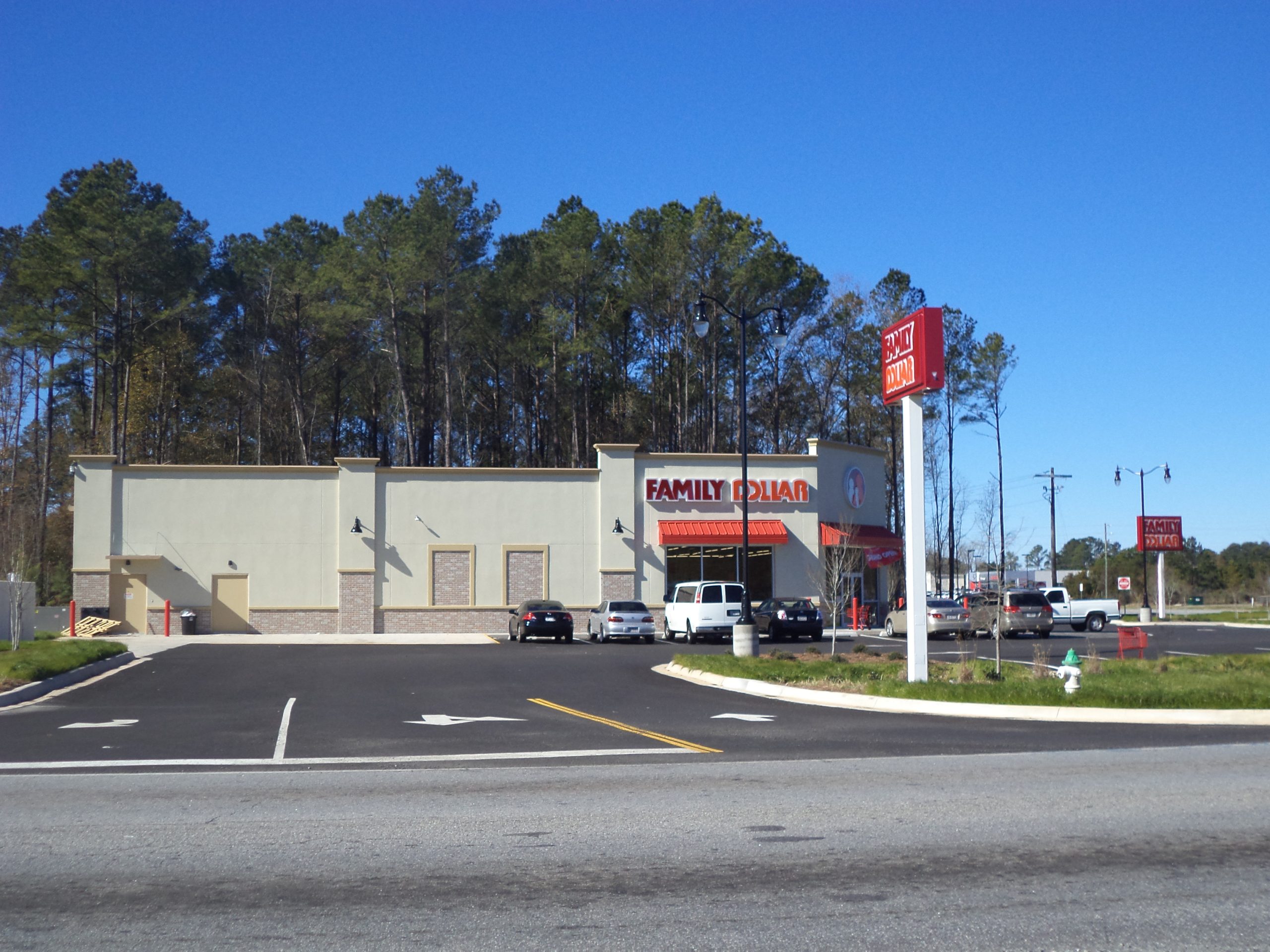
The headline number is $75 million. The portfolio is 46 Family Dollar stores across 19 states. The transaction was arranged for FD Retail Properties LLC, and the buyer was described as an institutional real estate investor. The stores are expected to keep operating, with the transaction positioned as a way to give Family Dollar financial flexibility while preserving its retail footprint.
Those are the facts of the deal. The more important story is what the transaction signals.
This is not a routine net lease disposition by a quiet credit tenant. It comes after Dollar Tree separated Family Dollar from its public-company platform, after a strategic review that began with underperforming stores, portfolio rationalization, and a failed decade-long attempt to make the two banners fit cleanly together. For net lease investors, the sale-leaseback is a useful case study in how capital markets value discount retail when the tenant story is improving, but still carries real operating and credit questions.
The lesson is not simply that discount stores remain financeable. The lesson is that sale-leasebacks are becoming a sharper dividing line between real estate strength, tenant strength, and sponsor strategy.
The transaction: $75 million, 46 properties, 19 states
The transaction’s advisors announced on June 29, 2026 that they had secured a $75 million sale-leaseback for a 46-property Family Dollar retail portfolio across 19 states. The seller was FD Retail Properties LLC. The buyer was an unnamed institutional real estate investor.
At a portfolio level, the transaction implies an average price of roughly $1.63 million per store. That figure is not a cap rate, and the release did not disclose rent, lease term, escalations, rent coverage, guarantor details, or state-level allocations. Still, the average price is directionally useful. Family Dollar boxes are generally smaller, neighborhood-oriented assets, often positioned around essential goods, convenience, and value retail rather than trophy real estate.
The release framed the portfolio as geographically diverse, with a coast-to-coast footprint designed to mitigate single-market risk. That matters. A 46-store pool across 19 states is not the same risk profile as a one-off Family Dollar in a tertiary town. Diversification does not eliminate tenant risk, but it changes how an institutional buyer can absorb individual store volatility.
For Family Dollar, the transaction converts owned real estate into capital while allowing the stores to remain open. For the buyer, it converts a discount retail operating footprint into a lease-backed income stream. That is the basic sale-leaseback bargain.
But the quality of that bargain depends on what sits behind the lease.
Why the timing matters: Family Dollar is no longer Dollar Tree’s problem
Family Dollar’s real estate story changed materially when Dollar Tree divested the banner.
Dollar Tree announced in March 2025 that Brigade Capital Management and Macellum Capital Management would acquire Family Dollar for approximately $1.007 billion, subject to customary closing adjustments. The deal closed in July 2025. Dollar Tree later estimated net proceeds of approximately $800 million, including $665 million paid at closing and roughly $135 million from monetizing cash through a reduction in net working capital.
That sale ended Dollar Tree’s strategic review of Family Dollar, which began in June 2024. The review was not cosmetic. Dollar Tree said it had previously announced a comprehensive review of the Family Dollar portfolio, including the planned closure of approximately 970 underperforming Family Dollar stores. The stated goal was to focus investment on remaining stores with more favorable long-term growth and return potential.
That sequence matters for NNN underwriting.
Before the separation, many Family Dollar lease conversations were really Dollar Tree credit conversations. After the sale, the lease analysis shifts. Investors need to separate legacy parent-company comfort from the actual post-divestiture tenant, sponsor support, store performance, lease structure, and residual real estate value.
In other words, Family Dollar’s private-company chapter may create opportunity, but it also requires a cleaner underwriting lens.
Sale-leaseback as a restructuring tool, not just a financing tool
A sale-leaseback is often described in simple terms: the operator sells real estate, signs a long-term lease, and frees capital for the business.
That description is accurate, but incomplete.
For a newly separated retailer, sale-leaseback proceeds can do several things at once. They can provide liquidity. They can help fund reinvestment. They can shift owned real estate into a more flexible capital structure. They can also make the operating company more asset-light, which may appeal to sponsors focused on operational turnaround and capital efficiency.
The tradeoff is equally important. The operator gives up ownership of the real estate and takes on a fixed lease obligation. If store-level sales, margins, labor, shrink, freight, or local demand weaken, the rent remains. A sale-leaseback can improve near-term liquidity while adding long-term occupancy discipline.
That is why the phrase “strategic sale-leaseback” deserves scrutiny. Strategic for whom? Strategic relative to what alternative? Strategic because the store base is strong, or strategic because capital is needed after a difficult separation?
The answer can be positive. It can also be mixed. The best net lease investors do not stop at the headline.
What institutional interest tells us, and what it does not
The fact that an institutional investor acquired the portfolio is meaningful. It suggests the assets were financeable, the lease package was marketable, and the buyer found enough comfort in the combination of tenant, rent, geography, store count, and real estate fundamentals.
It does not mean every Family Dollar lease is suddenly institutional-grade.
That distinction is critical. Portfolio execution and single-asset underwriting are related, but not identical. An institution buying 46 properties can price diversification, negotiate structure, and absorb a few weaker locations. A 1031 buyer acquiring one Family Dollar location does not have that same risk pool.
For private buyers, the right lesson is not “institutions bought Family Dollar, so Family Dollar is safe.” The right lesson is “institutions may still buy discount retail when the package, basis, geography, lease structure, and sponsor story work.”
That is a more useful conclusion.
Discount retail still has a need-based demand story
Family Dollar sits in a category with genuine demand logic. Value retail serves consumers who are managing tight household budgets, shopping for convenience, and buying essential goods close to home. In many small markets and lower-income neighborhoods, dollar-store formats function as everyday necessity retail.
That demand story is why dollar-store net lease properties have remained a major part of the single-tenant retail market. Investors understand the basic appeal: smaller boxes, repeat traffic, essential goods, relatively low price points, and a tenant category that can perform through economic stress.
But the category has also become more complicated.
Dollar General, Dollar Tree, and Family Dollar are not interchangeable credits. Store-level performance varies by market. Lease terms vary. Parent guarantees vary. Rural real estate residual value varies. Competition from Walmart, grocery, online retail, and other dollar-store locations can affect the durability of the unit. A small box that works as a lease-backed income property may still have limited alternate-use value if the tenant leaves.
That is why discount retail deserves neither blanket dismissal nor blind acceptance. It deserves underwriting.
The cap-rate question: the missing number is part of the story
The release did not disclose a cap rate. That omission is normal, but it is also important.
A $75 million price across 46 stores gives investors a transaction size and an average property basis. It does not tell them whether the deal priced aggressively or defensively. Without rent, lease term, rent bumps, renewal options, unit-level coverage, guaranty language, and property-level market data, no serious investor can infer the true risk-adjusted yield.
That is especially true for Family Dollar after the Dollar Tree separation.
If the lease package includes long remaining term, strong store economics, clean absolute NNN obligations, reasonable rent-to-sales coverage, diversified locations, and credible sponsor support, the portfolio can justify stronger institutional interest. If the rent is above market, the locations are weak, or the guaranty is thin, the same tenant name can mean something very different.
The cap rate is not just a number. It is the market’s opinion about all of those facts.
What 1031 buyers should learn from the deal
For 1031 exchange buyers, this transaction is useful because it shows how institutional capital thinks about discount retail risk.
The institutional buyer did not acquire a slogan. It acquired a lease stream attached to 46 stores, a reorganized tenant story, and a geographically diversified real estate package. That scale gives the buyer tools that a single-property buyer does not have.
A private buyer looking at one Family Dollar property should therefore ask a different set of questions:
- Who is the actual guarantor after the Dollar Tree divestiture?
- Is the lease absolute NNN, double net, or modified in practice?
- How many years remain on the initial term?
- Are rent increases fixed, percentage-based, periodic, or absent?
- What is the store’s sales trend and rent coverage, if available?
- Is the rent at, below, or above market for the box and trade area?
- What is the replacement tenant universe if Family Dollar leaves?
- Is the location essential to the tenant’s local distribution and customer strategy, or merely one more small box in a rationalized chain?
- Does the basis make sense as real estate, not just as a lease?
That last question is the one investors skip when the exchange clock is running.
A sale-leaseback can create a clean-looking NNN asset. It can also create a long-dated lease on a marginal piece of real estate. The difference is underwriting.
Why this deal belongs in the broader sale-leaseback cycle
The Family Dollar transaction also fits a broader pattern. As borrowing costs remain elevated and operators look for capital without issuing traditional debt or diluting ownership, sale-leasebacks become more attractive. Real estate becomes a financing source.
For operators, the appeal is obvious. They can raise capital tied to assets already embedded in the business. For real estate investors, the appeal is also obvious. They can buy mission-critical or operationally useful properties with long-term leases and predictable income.
But the best sale-leaseback deals are not simply the ones with recognizable tenants. They are the ones where the lease terms, rent basis, unit economics, sponsor alignment, and residual property value all survive a downside case.
That is why the Family Dollar sale-leaseback is more interesting than its size suggests. It sits at the intersection of private equity ownership, discount-retail turnaround, portfolio rationalization, and net lease capital demand.
The underwriting takeaway
Family Dollar’s $75 million sale-leaseback shows that institutional capital is still willing to underwrite discount retail when the package is structured correctly. It also shows why tenant names alone are not enough.
Family Dollar is not the same credit story it was under Dollar Tree. The banner now sits inside a private-company repositioning backed by Brigade and Macellum, after a strategic review that included the planned closure of roughly 970 underperforming stores. That does not make the remaining stores bad. It makes location selection, lease structure, guaranty analysis, and basis more important.
For investors, the right conclusion is disciplined, not dramatic.
Discount retail can still work in net lease portfolios. Family Dollar can still attract institutional capital. Sale-leasebacks can still be powerful tools for operators and income investors. But the lease is only as strong as the tenant’s ability to pay, the store’s reason to exist, and the real estate’s value if the tenant does not.
That is the real lesson from the 46-store portfolio. The market did not just buy Family Dollar. It bought a structured answer to a specific risk.
Private buyers should demand the same.
Dollar Store NNN Acquisition Help
You do not have to be an institution to use the same needs-based retail thesis.
Institutional buyers are still underwriting discount retail portfolios, but individual investors and 1031 exchange buyers are also actively acquiring single-tenant dollar store properties. The key is knowing which lease, location, guaranty, rent basis, and tenant story actually fit the risk.
If you are evaluating a Dollar General, Family Dollar, or other needs-based dollar store net lease property, talk with Investment Grade before the exchange clock or bidding process forces a rushed decision.
Sources
- SFNet: Family Dollar completes $75 million strategic sale-leaseback across 19-state portfolio, June 29, 2026. https://www.sfnet.com/home/industry-data-publications/the-secured-lender/tsl-express-daily-articles-news/tsl-express-daily-articles-news/2026/06/30/family-dollar-completes–75-million-strategic-sale-leaseback-across-19-state-portfolio
- Dollar Tree: Dollar Tree completes sale of Family Dollar business to Brigade Capital Management and Macellum Capital Management, July 7, 2025. https://corporate.dollartree.com/news-media/press-releases/detail/288/dollar-tree-completes-sale-of-family-dollar-business-to
- Dollar Tree: Dollar Tree announces agreement to divest Family Dollar business to Brigade Capital Management and Macellum Capital Management, March 26, 2025. https://corporate.dollartree.com/investors/news-events/press-releases/detail/280/dollar-tree-announces-agreement-to-divest-its-family-dollar
- Dollar Tree: Dollar Tree announces review of strategic alternatives for Family Dollar business, June 5, 2024. https://corporate.dollartree.com/news-media/press-releases/detail/268/dollar-tree-announces-review-of-strategic-alternatives-for
- InvestmentGrade.com: Family Dollar Credit Rating & NNN Cap Rate. https://investmentgrade.com/family-dollar-credit-rating-nnn-cap-rate/
- InvestmentGrade.com: Dollar Store NNN Cap Rates: Dollar General vs Dollar Tree vs Family Dollar. https://investmentgrade.com/dollar-store-nnn-cap-rates-dollar-general-dollar-tree-family-dollar/
See how the investment grade threshold shapes net lease pricing, and dive deeper in our investment grade guide.
