
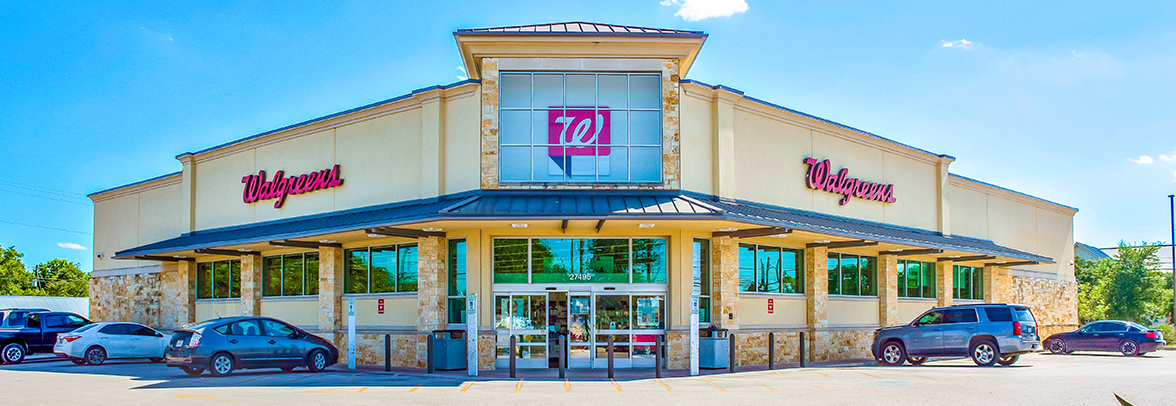
Originally published February 20, 2025, as a forecast of the drugstore closure wave. Rewritten October 4, 2026, to replace the forecasts with what actually happened and what it means for net lease owners today.
Between 2022 and 2025, the three national drugstore chains closed thousands of stores, and a large share of those buildings were net leased to individual investors. For owners of single-tenant pharmacy real estate, the closures raised three practical questions: will my tenant keep paying rent, what is the building worth if it does not, and how is the market pricing pharmacy credit now? This update answers those questions with dated facts. For background on why tenant credit drives net lease pricing, see what investment grade means for NNN and our investment grade guide.
What Actually Happened: 2022 to 2026
| Chain | Closures | Where It Stands (October 2026) |
|---|---|---|
| Walgreens | Announced in October 2024 a plan to close about 1,200 stores over three years, including about 500 in fiscal 2025 | Taken private by Sycamore Partners on August 28, 2025; no public S&P or Moody’s ratings. Reports in 2026 say the closure plan was scaled back to fewer than 100 stores in 2026. |
| CVS | About 900 stores closed from 2022 through 2024, then about 270 more in 2025 | Public and investment grade (BBB/Baa3); approximately 9,000 retail locations at December 31, 2025. |
| Rite Aid | Closed hundreds of stores after its October 2023 bankruptcy filing | Filed for bankruptcy again in May 2025 and closed its remaining stores; leases were rejected or sold to other operators. |
Sources: company announcements and SEC filings (CVS 2025 Form 10-K), Walgreens and Sycamore Partners transaction announcements, and 2025 to 2026 press reports on the Walgreens and Rite Aid closure programs. Ratings per our tenant ratings database.
The forecasts of early 2025 were partly right and partly wrong. Rite Aid did disappear entirely, which put hundreds of former drugstore buildings on the market at once. Walgreens, however, closed far fewer stores in 2026 than its 2024 plan implied once it was under private ownership, and CVS finished its program and kept its investment grade ratings.
Dark Stores Still Pay Rent; Vacant Stores Do Not
For an owner, a store closure and a lease ending are different events. Many drugstore leases written between roughly 1995 and 2015 let the tenant stop operating while it keeps paying rent for the rest of the term. A dark store is closed but its lease is in force, so the asset is the remaining rent stream plus the building. A vacant store has no tenant in possession and usually no rent coming in, because the lease expired, was terminated, or was rejected in bankruptcy (rejection is treated as a breach, so a capped damages claim or guaranty rights may survive). Most Walgreens and CVS closures have been dark; most former Rite Aid stores are vacant or were re-let to other operators. Our guide to who is buying dark Walgreens, CVS, and Rite Aid stores covers pricing for both.
How the Market Prices Pharmacy Credit Now
Across the active listings InvestmentGrade.com tracks as of October 2, 2026, the median CVS asking cap rate is about 6.5% and the median Walgreens asking cap rate is about 7.5%. Remaining lease term drives much of that gap: Walgreens leases with 10 or more years left ask about 6.5% at the median, while those with under five years left ask about 8.5%. These are asking cap rates, not closing cap rates. Our CVS vs Walgreens comparison breaks the numbers down further.
Who Backfills a Closed Drugstore
A typical freestanding drugstore is roughly 10,000 to 15,000 square feet on a corner lot with parking and often a drive-through, a format that many other users can adapt. Categories that have taken over former drugstore buildings include dollar and off-price retailers, grocers, healthcare users such as urgent care and dialysis, auto parts chains, car washes, fuel and convenience operators, and redevelopers. Second-generation rent is often lower than the original pharmacy rent, so backfill plans should be underwritten against local market rent for the new use, not the old lease.
A Short Checklist for Pharmacy NNN Owners
- Re-read the lease: go-dark rights, recapture rights, assignment and sublease rights, and who owns roof and structure.
- Confirm the tenant entity and any guarantor named in the lease, especially for Walgreens after the 2025 buyout.
- Build the remaining rent schedule; it is the first number any buyer will check.
- Price two or three realistic backfill scenarios using local market rent.
- Compare holding, selling with the rent stream, and selling vacant after a negotiated buyout. Our Walgreens owner update walks through each path.
Frequently Asked Questions
Is Walgreens still closing stores in 2026?
Yes, but far fewer than first planned. Walgreens announced in October 2024 a plan to close about 1,200 stores over three years. After Sycamore Partners took the company private in August 2025, reports in 2026 said the plan was scaled back to fewer than 100 closures in 2026.
Does a closed Walgreens or CVS still pay rent?
Often yes. Many drugstore leases let the tenant stop operating while continuing to pay rent for the remaining term. Whether yours does depends on the go-dark, recapture, and termination language in the lease.
What happened to Rite Aid’s stores?
Rite Aid filed for bankruptcy in October 2023 and again in May 2025, and closed its remaining stores in 2025. Its leases were either rejected, leaving landlords with capped damages claims, or sold to other operators, so many former Rite Aid buildings are now vacant or re-let.
