
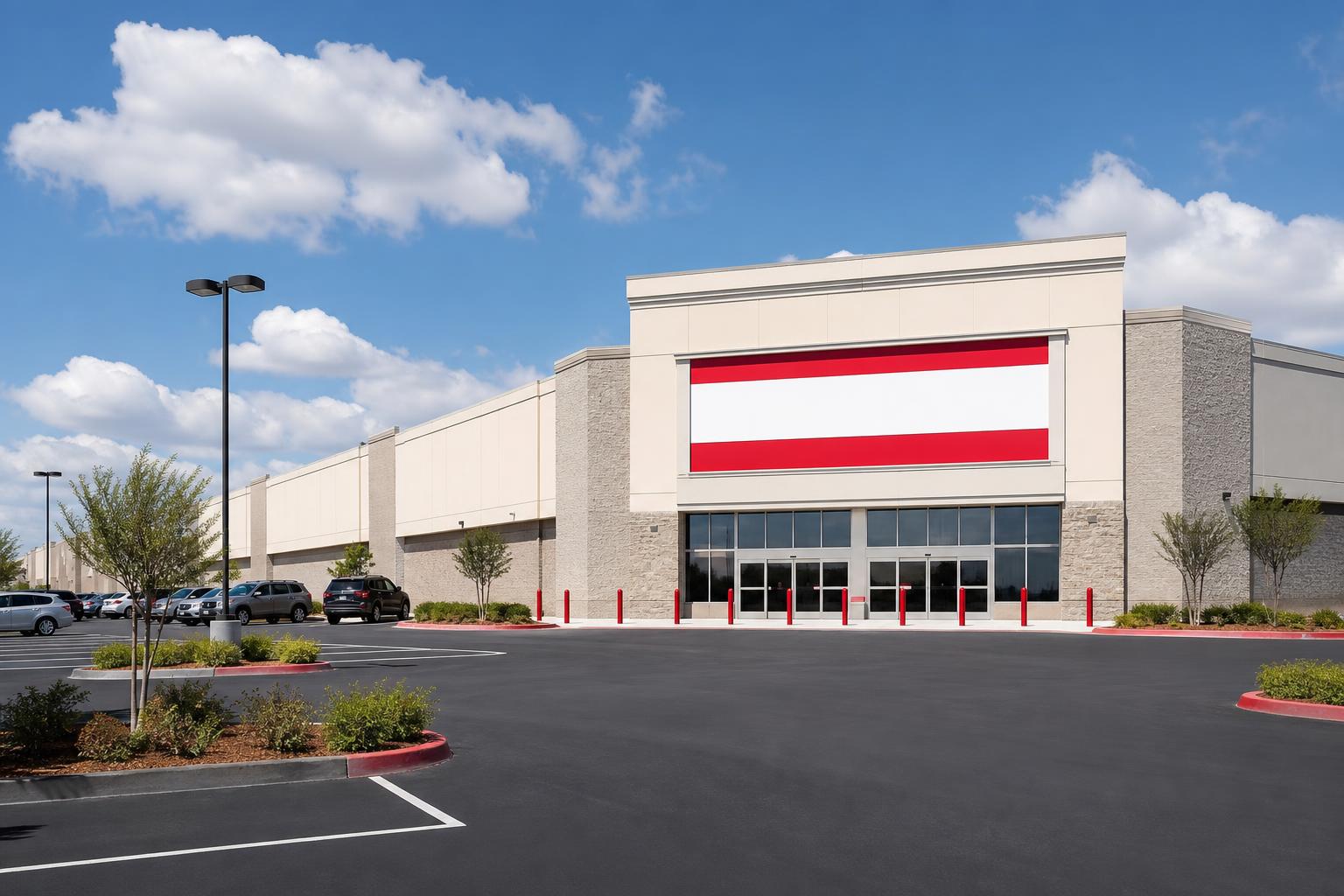
Breaking credit update: BJ’s Wholesale Club crossed an important line for net lease investors this week. Fitch assigned the company a first-time BBB Long-Term Issuer Default Rating with a Stable Outlook, moving BJ’s into investment grade territory at one of the three major rating agencies.
That does not make BJ’s a Costco clone. It does not erase the spread investors still demand for a smaller, more geographically concentrated warehouse club operator. But it does change the underwriting conversation around BJ’s Wholesale Club NNN real estate.
For years, BJ’s sat in the familiar near-investment-grade bucket: strong operating performance, sticky membership income, essential retail demand, but still officially below the BBB-/Baa3 threshold at S&P and Moody’s. Fitch’s new BBB rating gives the credit its first formal investment grade stamp.
What changed
According to BJ’s Wholesale Club, Fitch assigned the company a first-time BBB Long-Term Issuer Default Rating and also assigned BBB+ ratings to the company’s ABL revolving credit facility and secured term loan due 2029. The outlook is Stable.
Fitch cited BJ’s position in the U.S. warehouse club sector, its loyal membership base, consistent comparable-store sales and EBITDA growth, positive cash generation, and modest EBITDAR leverage. BJ’s also noted that it now serves more than 8 million members across 22 states.
The company still carries S&P BB+ and Moody’s Ba1 ratings, which are one notch below investment grade. That makes this a split-rating credit: investment grade at Fitch, still below investment grade at S&P and Moody’s.
The underwriting point: BJ’s moved from upgrade candidate to split investment grade
Before this rating action, the clean description for BJ’s was near-investment-grade warehouse club credit. After the Fitch rating, that description is too conservative.
BJ’s is now a split-rating tenant with one investment grade agency rating. That matters in three places:
- Buyer pool: Some institutional and private buyers will view a Fitch BBB rating as enough to move BJ’s out of the high-yield-only bucket.
- Lender discussion: A BBB Fitch rating can support a stronger credit narrative when lenders underwrite tenant risk, even if they still haircut the credit for S&P and Moody’s.
- Exit liquidity: Owners of BJ’s NNN assets can now tell a better story to the next buyer, especially if the lease has long term remaining and the real estate is in a strong trade area.
The move is especially relevant because BJ’s assets are not small-format retail boxes. They are large warehouse club properties, often 85,000 to 115,000 square feet, with institutional price points. On assets of that size, the marginal buyer pool matters.
What it does not mean
The rating does not mean BJ’s NNN properties should immediately price like Costco, Walmart, or Sam’s Club.
Costco remains a materially stronger credit, with broader scale, deeper national and international diversification, and a more established institutional buyer halo. BJ’s is still more concentrated in the eastern United States. That geographic concentration can be a strength at the store level, especially in dense and affluent markets, but it is still a credit distinction.
For that reason, the right comparison is not simply, “BJ’s is investment grade now, so cap rates should compress to Costco levels.” The better question is whether BJ’s cap rates should begin tightening relative to other BB+/Ba1 large-format retail tenants that do not have an investment grade rating from any major agency.
Cap-rate implications for BJ’s NNN owners
Before the Fitch rating, BJ’s NNN properties were generally underwritten in the 6.25% to 7.25% cap-rate range, depending on lease term, market, rent level, store performance, and real estate quality. That range reflected a blend of strong operating performance and non-investment-grade credit status.
The Fitch rating should support the tighter end of that range for stronger assets. The most likely beneficiaries are:
- Long-term ground leases or absolute NNN leases with meaningful remaining term
- Dense, high-income eastern U.S. trade areas
- Properties with strong traffic drivers, gas components, or shadow-anchor strength
- Assets where rent is well supported by replacement cost and store-level economics
Shorter lease term, weak residual real estate, oversized rent, or secondary-market execution risk can still overwhelm the benefit of a rating upgrade. Tenant credit is important, but in NNN underwriting it is not the whole asset.
Why this is a sale-leaseback and refinancing signal
This rating action is also a useful marker for owner-operators and sponsors evaluating capital markets alternatives. A tenant credit that has just received its first investment grade rating can sometimes support better sale-leaseback pricing, lender appetite, and investor reception.
That does not mean every operator can demand trophy pricing. Buyers still underwrite rent coverage, lease term, unit economics, real estate quality, and replacement use. But a first-time investment grade rating gives the capital markets desk something concrete to point to.
For BJ’s landlords, the practical question is simple: does this rating improve your refinance terms, disposition value, or buyer pool enough to justify acting now?
The investor takeaway
BJ’s Wholesale Club is no longer just a near-investment-grade story. It is now a split-rating warehouse club credit with a Fitch BBB rating and Stable Outlook.
That should matter for tenant-credit underwriting, lender conversations, and disposition strategy. But it should not eliminate the need to underwrite the real estate. The spread between BJ’s and Costco NNN assets still exists for a reason.
The opportunity is in the middle: BJ’s may now sit in a stronger institutional lane than the market previously gave it credit for, while still offering more yield than the highest-rated warehouse club tenants.
Own a BJ’s Wholesale Club property?
If you own a BJ’s Wholesale Club NNN property, the Fitch rating may affect your hold, refinance, or disposition strategy. Investment Grade can evaluate current value, buyer depth, lease structure, lender appetite, and whether the new rating changes the market for your asset.
🏢 Looking beyond BJ’s? Acquire, sell, refinance, or reposition NNN property with Investment Grade.
Investment Grade represents investors, 1031 exchange buyers, property owners, and owner-operators across the full net lease lifecycle: acquisitions, dispositions, sale-leasebacks, refinancing strategy, capital markets coordination, and tenant-credit underwriting.
Whether you are targeting investment grade tenants, evaluating a sale, replacing debt, or comparing NNN opportunities across sectors, we help you underwrite the credit, lease structure, cap-rate market, and exit strategy before you move.
📞 Discuss your NNN acquisition, disposition, or capital markets strategy today
