
Update, October 4, 2026: Dutch Bros did not acquire the Salad and Go sites. After announcing its offer on August 5, 2026, Dutch Bros said on August 31 that it had chosen not to increase it. 7 Brew Drive-Thru Coffee then emerged as the winning bidder at the court-supervised auction, with a reported $143.2 million bid for 73 sites, and at the end of September the bankruptcy court approved a sale to 7 Brew that, as reported, covered fewer sites (about $123 million for at least 60 locations). This article has been revised to reflect that outcome.
Dutch Bros never proposed to buy Salad and Go’s recipes, brand or restaurant company. It bid for something more useful to a fast-growing drive-through operator: control of up to 65 already-developed sites. It lost that contest to 7 Brew, but the episode still shows why leasehold control, entitlements, access, utilities and drive-through layout can be worth millions even when the buyer does not acquire the underlying real estate.
Featured Off-Market Opportunity: new construction Dutch Bros, Florida. Dutch Bros growth is also reaching net lease buyers through developers. A new Florida drive-through is coming to market and is not publicly listed yet. Register for early access or see the Dutch Bros NNN properties we track for sale.
Dutch Bros’ original offer
Court-derived summaries of the asset purchase agreement Dutch Bros announced on August 5, 2026 identified two groups of leases:
- 51 operating or recently operating Arizona and Nevada drive-through leases for $105 million in cash
- 14 previously closed Texas and Oklahoma leases for a nominal $50, conveyed as-is
The agreement included a $10 million deposit and approximately $900,000 in proposed cure costs across the 65 leases. It covered leasehold interests, furniture, fixtures, equipment and related site assets, and excluded the Salad and Go brand and recipes. Like most bankruptcy sales, it was subject to higher offers at auction and to court approval.
How the auction played out
- August 5, 2026: Dutch Bros announced its agreement, which set the opening terms for the sale process.
- August 31, 2026: Dutch Bros said it had chosen not to increase its offer for the Salad and Go sites.
- Early September 2026: 7 Brew was reported as the winning bidder, at $143.2 million for 73 sites.
- End of September 2026: The bankruptcy court approved the sale to 7 Brew. Reports described the approved deal as about $123 million for at least 60 locations, fewer than the auction bid.
The final list of assumed and assigned leases is set by the court’s sale order and its lease schedules. Landlords should rely on those documents, not on press coverage, to confirm whether their lease was assigned.
What the bidders were paying for
Dutch Bros’ $105 million offer worked out to approximately $2.06 million for each of the 51 core leases before cure payments, conversion costs and future rent. 7 Brew’s reported auction bid worked out to about $1.96 million per site across 73 sites. Neither is a land price. They are prices for site control and speed.
A new drive-through project can require land assembly, zoning, use approvals, access negotiations, utility work, civil engineering, construction, signage and a long development calendar. Salad and Go’s compact drive-through buildings already occupy visible retail pads in fast-growing Sun Belt markets. A bidder compares the price of the bankruptcy lease package with the time, execution risk and capital needed to recreate a similar pipeline one parcel at a time. That two drive-through coffee chains competed for the same sites shows how scarce these pads have become.
Why the locations are not interchangeable
The portfolio headline hides site-level differences. Each lease carries its own rent, remaining term, options, use language, assignment provisions, access rights, landlord relationship and real estate quality. Dutch Bros’ agreement let it exclude certain Arizona or Nevada leases, reducing the price by roughly $2.1 million per site, and the gap between 7 Brew’s auction bid and the approved sale suggests that some sites dropped out of the final package.
For landlords, there are two possible outcomes. A selected lease is assumed, cured and assigned to the buyer. An excluded or rejected lease returns to the landlord as a dark property that must be re-tenanted.
Why Salad and Go’s old lease structure matters
Our related Salad and Go landlord analysis explains what assumption, cure and rejection can mean for those owners. Public sales evidence shows that multiple Salad and Go locations were developed and sold as absolute NNN ground leases to separate real estate owners. Examples include properties in Phoenix, Euless and Edmond, with public materials describing 20-year terms, corporate guaranties and scheduled rent increases.
So the buyer was never assembling a fee simple portfolio from one seller. It was assembling operating control across properties owned by many different landlords, through bankruptcy-authorized lease assumption and assignment. That is more complex than buying owned parcels, but more capital efficient: the buyer gains a block of potential openings without tying up capital in land.
What it means for Dutch Bros
Losing the auction does not change Dutch Bros’ core growth plan, which relies on its own development pipeline. The company had 1,225 shops at June 30, 2026, plans at least 185 openings in 2026, and has set a goal of 2,029 system shops in 2029. Its second quarter 2026 revenue rose 32.5% to $550.9 million. Our Dutch Bros NNN tenant and credit profile covers the lease-credit side: Dutch Bros Inc. has no agency rating, and the tenant entity and guaranty vary by lease.
Dutch Bros’ decision not to raise its bid is also a useful signal for investors: it put a price on site control and walked away above it, rather than paying whatever the auction required.
What NNN landlords should watch
For owners of former Salad and Go properties, the name on the assignment documents matters more than the name in the headline. Identify the actual assignee entity, any guarantor, and the financial information offered as adequate assurance of future performance. 7 Brew is privately held, so its credit must be underwritten from what the assignee provides rather than from an agency rating.
Permitted use also matters. A lease written for salads, wraps and related food may or may not cleanly accommodate a beverage-focused drive-through. Access, queuing, parking, signage, exclusives and shopping center restrictions can affect conversion feasibility. Owners should also confirm the cure amount assigned to their lease and whether it captures all allowable defaults.
Owners whose leases were not assigned face a re-tenanting decision. These are small drive-through buildings on retail pads, which suits coffee, quick service and some service users, but downtime, conversion costs and local demand vary site by site.
What investors still cannot know
The public record summarized here does not establish the rent and term on every lease, the conversion cost per location, the guaranty structure on each assignment, or store-by-store opening dates. Those gaps prevent a precise return calculation. For net lease investors, the episode still illustrates a useful distinction: the landlord owns the real estate, the tenant controls the leasehold, and in the right location both can carry substantial value and change hands separately.
Sources and limitations
- And Go Concepts, LLC bankruptcy case record, U.S. Bankruptcy Court for the Southern District of Texas, Case No. 26-90753
- Dutch Bros second quarter 2026 results (SEC filing, August 5, 2026), including shop count and the Salad and Go transaction announcement
- Dutch Bros: Dutch Bros Chooses Not to Increase Offer for Salad and Go Sites (August 31, 2026)
- Arizona’s Family reporting based on the filed purchase agreement
- Nation’s Restaurant News on 7 Brew’s winning $143 million bid
- Reporting on court approval of 7 Brew’s $123 million purchase of at least 60 units
- 11 U.S.C. § 365 governing assumption and assignment of unexpired leases
Reporting limit: Sale terms after the auction are based on news reports of the court process; the court’s sale order and lease schedules control. Individual rents, remaining terms, conversion budgets and opening dates were not publicly established when this analysis was updated.
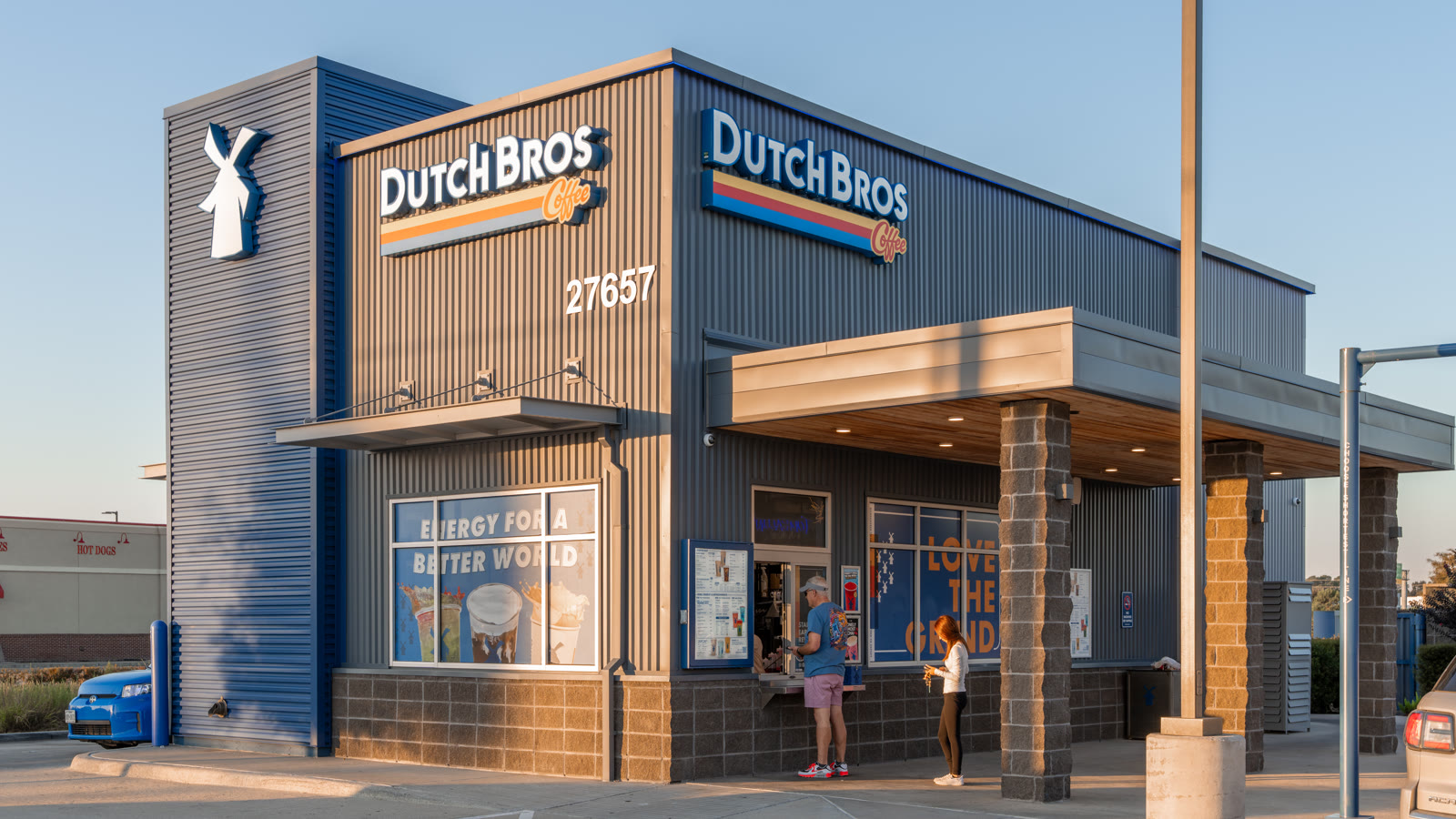
Featured photograph: Ajay Suresh, via Wikimedia Commons, CC BY 4.0; cropped to 16:9.
Buying, selling or exchanging into a Dutch Bros or another NNN property?
Owners: We can evaluate the tenant, guaranty, remaining lease term, rent and site, and confidentially test buyer demand before you formally list.
Buyers: Send the offering memorandum, lease, asking price, cap rate and financing assumptions. We will help pressure-test the credit, lease economics and residual real estate before you commit.
1031 exchangers: Send your sale date, 45-day deadline, equity, debt replacement target, income goal and the properties already under review. We can build or compare a credit-graded NNN shortlist.
Start a confidential property conversation or request NNN replacement property help.
This article is educational and is not legal, tax or investment advice.
For the credit framework that separates rated from unrated drive-through tenants, see how investment grade tenancy is priced across the NNN market and how the rating scale works in our investment grade guide.
