
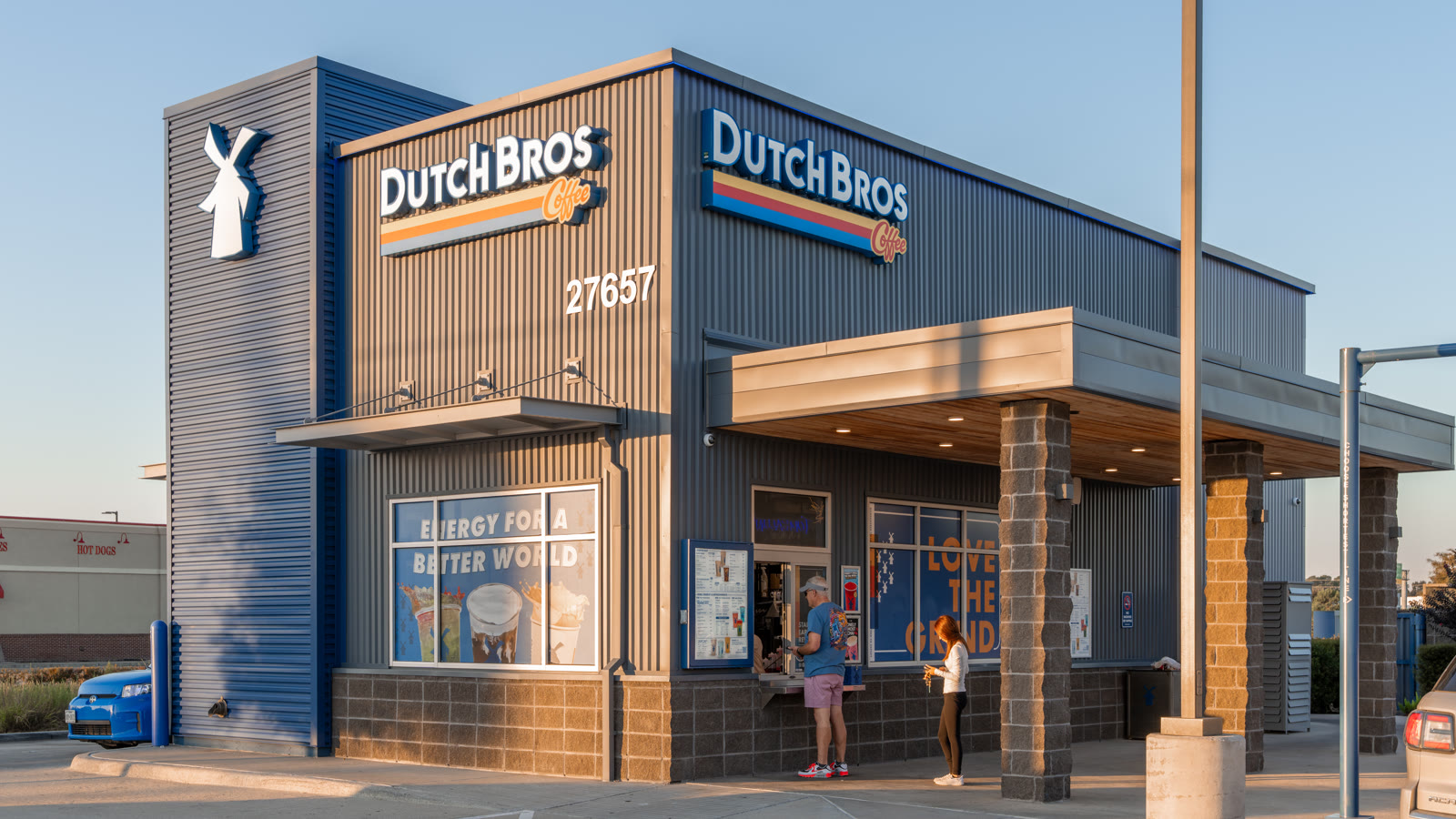
Dutch Bros Inc. is a fast-growing drive-thru beverage company whose real-estate strategy matters to net-lease investors even though the public company is not currently rated investment grade by the major rating agencies.
This profile separates the brand from the lease credit. A Dutch Bros sign does not, by itself, identify the entity obligated under a particular lease. Buyers should verify the tenant, guarantor, lease term, rent schedule, store maturity, and residual real estate before assigning value to the brand name.
Featured Off-Market Opportunity: new construction Dutch Bros, Florida. A developer has a new Dutch Bros drive-thru in Florida coming to market. It is not publicly listed yet. Register for early access, or see the Dutch Bros NNN properties for sale that we track, with live cap rates and pricing.
Dutch Bros tenant and credit overview
- Parent company: Dutch Bros Inc.
- Stock ticker: BROS (NYSE)
- Business: Drive-thru beverages
- Credit status: Not Rated; our ratings database has no S&P, Moody’s or Fitch rating for Dutch Bros Inc.
- Real-estate format: Compact drive-thru shops, commonly on leased sites
- Primary underwriting issue: The exact lease obligor and guaranty can vary by property
Why Dutch Bros matters to NNN investors
Dutch Bros is expanding rapidly, but growth does not eliminate lease-level risk. A buyer should distinguish the public parent company from the subsidiary or operating entity named in the lease. The strength of a Dutch Bros NNN investment depends on the actual guaranty, remaining lease term, rent coverage, site access, drive-thru stacking, market rent, and the property’s value to a replacement user.
Dutch Bros’ 2026 Salad and Go transaction shows why the lease matters. On August 4, 2026, Dutch Bros entered into an agreement to acquire the real estate and related site assets of up to 65 Salad and Go locations across Arizona, Nevada, Oklahoma and Texas (Dutch Bros Inc. Form 8‑K, August 5, 2026). As of its Form 10‑Q filed August 6, 2026, Dutch Bros expected the closing in the third quarter of 2026, subject to applicable approvals and other customary closing conditions; check later company filings for whether and on what terms it closed. For a landlord, the question is which entity ends up obligated under each site’s lease. Read our full analysis of the Dutch Bros and Salad and Go transaction.
The Salad and Go landlord connection
When a bankrupt restaurant operator leases its sites from separate owners, the bankruptcy court can approve the assumption and assignment of a lease to a new operator, who then occupies a property that remains owned by an individual investor, developer, fund or other landlord (11 U.S.C. 365). The related Salad and Go bankruptcy analysis explains cure payments, adequate assurance, lease rejection, guaranty risk, and what selected versus excluded landlords may face.
What buyers should verify in a Dutch Bros lease
- The exact tenant entity and whether Dutch Bros Inc. guarantees the lease
- Original and remaining lease term, options, rent increases, and assignment rights
- Store-level sales or other evidence of rent coverage, when available
- Landlord responsibilities despite any NNN label
- Drive-thru access, stacking, signage, parking, utilities, and permitted use
- Current rent versus market rent and the cost of adapting the site for another user
- Whether the investor would own only the land (a ground lease) or the land and the building, and whether the property is part of a larger center
Bottom line
Dutch Bros offers a recognizable growth story, but a Dutch Bros NNN property should be underwritten from the lease outward. The brand can support demand. The signed credit, rent economics, and residual real estate determine the investment.
Buying, selling, or exchanging into a Dutch Bros or another NNN property?
Owners: We can evaluate the tenant, guaranty, remaining lease term, rent, and site, and confidentially test buyer demand before you formally list.
Buyers: Send the offering memorandum, lease, asking price, cap rate, and financing assumptions. We will help pressure-test the credit, lease economics, and residual real estate before you commit.
1031 exchangers: Send your sale date, 45-day deadline, equity, debt-replacement target, income goal, and properties already under review. We can build or compare a credit-graded NNN shortlist.
Start a confidential property conversation or request NNN replacement-property help.
This profile is educational and is not legal, tax, credit-rating, or investment advice. Lease and guaranty terms are property-specific and should be confirmed from the executed documents.
Related Tenant and Sector Research
- Dutch Bros NNN Properties For Sale: Listings, Cap Rates and 1031 Guide
- Investment Grade Tenants: NNN Credit Ratings Index
- The Investment Grade Guide: Ratings, Cutoff and Framework
- QSR NNN Cap Rates by Tenant Credit and Lease Type
- When an Absolute-NNN Tenant Goes Bankrupt: The Salad and Go Landlord Test
Dutch Bros NNN Properties Observed For Sale
97 active Dutch Bros net lease listings observed across public listing sources, most recently Oct 9, 2026. Asking figures as published by the listing party.
| Location | Asking Price | Cap Rate | Building SF | Term Left | |
|---|---|---|---|---|---|
| Ammon, ID | $1,950,000 | 5.37% | 800 | 8.0 yrs | View listing |
| COEUR D ALENE, ID | $1,490,000 | 5.50% | 370 | 11.4 yrs | View listing |
| Las Cruces, NM | $2,745,455 | 5.50% | 871 | n/a | View listing |
| Logan, UT | $2,740,740 | 5.40% | n/a | n/a | View listing |
| Syracuse, UT | $3,123,810 | 5.25% | 1,025 | n/a | View listing |
| Pearl, MS | $2,965,000 | 5.65% | 986 | n/a | View listing |
| Oxford, MS | $3,000,000 | 5.30% | 986 | n/a | View listing |
| Ankeny, IA | $3,075,000 | 5.50% | 986 | n/a | View listing |
Search all 97 observed Dutch Bros listings and the full NNN inventory
Market observations aggregated from listing broker materials; not offerings by Investment Grade Income Property, LP. Buyer representation available on a cooperating commission basis. Information deemed reliable but not guaranteed.