
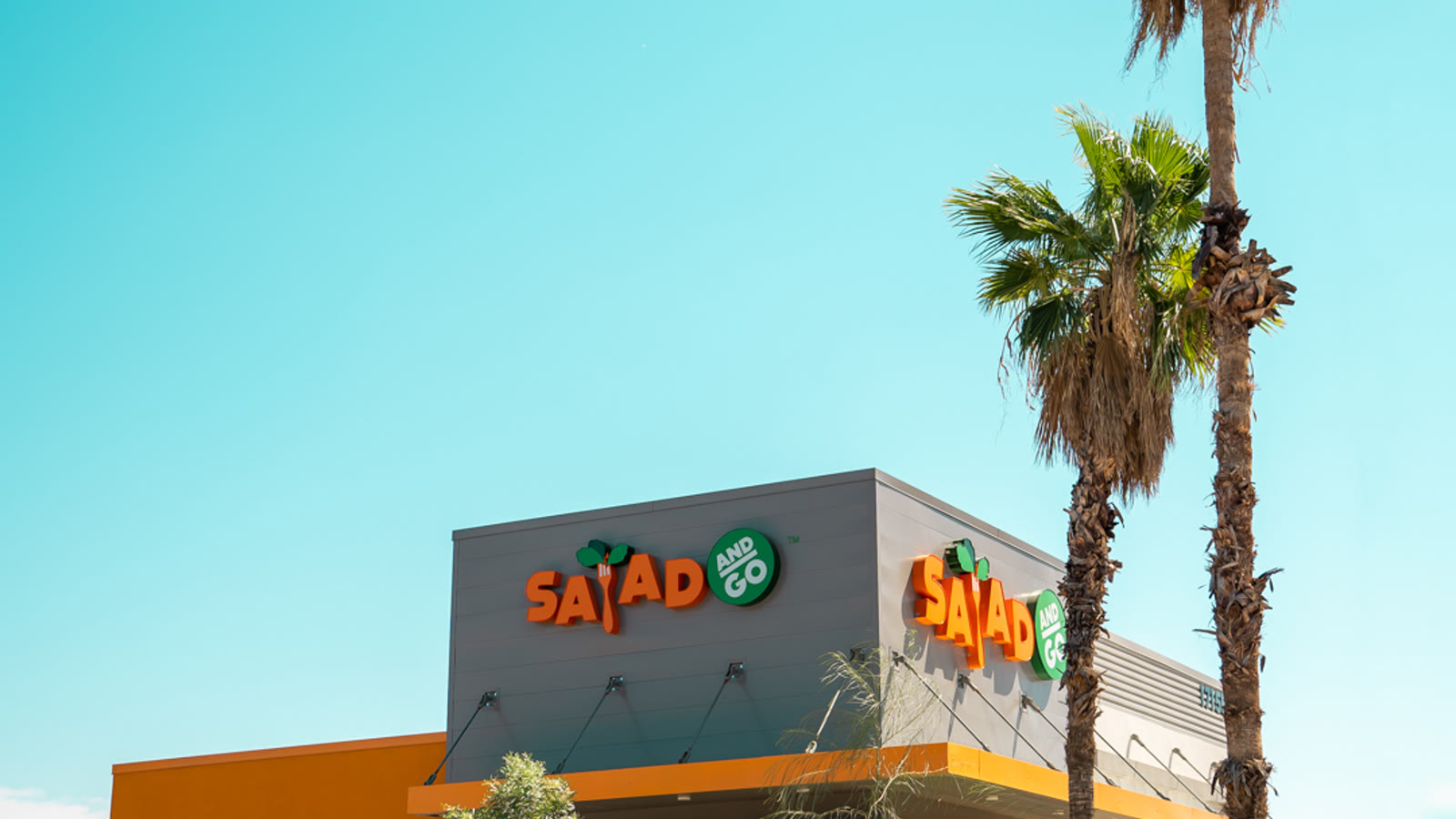
For years, Salad and Go locations were sold using a familiar net-lease promise: a new drive-thru building, a long corporate-backed lease, predictable rent increases, and little or no landlord responsibility. Then the restaurant chain filed Chapter 11, closed its remaining restaurants, and put a lease sale between dozens of landlords and an uncertain outcome.
Update, October 4, 2026: The lease sale described below changed buyers. At the court-supervised auction on August 31, 2026, Dutch Bros (through Boersma Bros. LLC), whose $105 million agreement opened the process, did not submit a topping bid. The debtors named Brew Culture, LLC (7 Brew) the successful bidder for 73 sites, valuing its bid at about $143.2 million, and named Dutch Bros the back-up bidder under its August 4 agreement. After the auction, the 7 Brew agreement was amended to remove certain leases, reducing the price to about $123.5 million, according to a September 28 declaration filed in the case. Hearings on leases with landlord objections were adjourned to September 29, 2026, and news reports say the court approved the sale to 7 Brew at the end of September. The entered sale order and its lease schedules control which leases were assumed; check the case docket for your lease.
That is the part of the Salad and Go bankruptcy that matters to a private net-lease investor.
An absolute triple-net lease can shift taxes, insurance, maintenance, roof, and structural obligations to the tenant. It cannot make the tenant solvent. When the operating company fails, the value of the investment turns on four things that were always present beneath the rent check: the legal obligor, the guaranty, the lease language, and the residual value of the real estate.
Salad and Go is now a live case study in all four.
Featured Off-Market Opportunity: new construction Dutch Bros, Florida. Buyers who want drive-thru coffee exposure with a clean slate can look at developer-built new construction. A new Florida Dutch Bros is coming to market and is not publicly listed yet. Register for early access or see the Dutch Bros NNN properties we track for sale.
What happened
Salad and Go’s parent, And Go Concepts, LLC, and affiliated debtors filed Chapter 11 in the Southern District of Texas on August 4, 2026. At its peak the company operated 146 locations in Arizona, Nevada, Texas and Oklahoma. After closing more than 70 Texas and Oklahoma locations in 2025 and January 2026, it filed to wind down the remaining business and sell its leases, according to its first-day declaration.
Court-derived transaction summaries described the opening agreement with Boersma Bros, LLC, an entity connected to Dutch Bros, covering 65 drive-through leases: 51 Arizona and Nevada leases for $105 million in cash, plus 14 previously closed Texas and Oklahoma leases for a nominal $50, with proposed cure costs of approximately $900,000. That agreement was then tested at auction, where Dutch Bros declined to top 7 Brew’s bid.
Those words matter: these are leases, not 65 parcels of real estate owned by Salad and Go.
The underlying properties remain with their landlords. The bankruptcy estate sold Salad and Go’s leasehold interests, equipment, furniture, fixtures, and related site assets. Where a lease was selected and assigned, the landlord has a new operator in the building. If a lease is excluded or rejected, the landlord faces a very different problem.
These properties were sold as net-lease investments
The public transaction record confirms that at least part of Salad and Go’s footprint was developed and sold to separate real-estate investors.
At 4716 East Ray Road in Phoenix, a newly built Salad and Go property sold in 2021 for $3.7 million to a Nevada-based 1031-exchange buyer. The property was marketed with a 20-year absolute-NNN ground lease.
Other public offerings and closing announcements show the same structure in additional markets. A Salad and Go ground lease in Euless, Texas, was marketed with a new 20-year absolute-NNN term and 10 percent rent increases every five years. An Edmond, Oklahoma, property sold for $1.7 million with a new 20-year absolute-NNN, corporate-guaranteed ground lease. Public marketing materials for other locations describe long terms, corporate guaranties, fixed increases, and passive ownership.
That evidence does not prove every Salad and Go location had identical ownership or lease terms. Some properties may be owned by private 1031 buyers, while others may be held by developers, funds, partnerships, or larger landlords. The sale process itself, however, establishes that the target sites are leasehold assets rather than a fee simple portfolio.
What lease assumption means for a Salad and Go landlord
Section 365 of the Bankruptcy Code allows a debtor, with court approval, to assume an unexpired lease and assign it to another party. In general, existing monetary defaults must be cured, actual pecuniary losses caused by the default may need to be addressed, and the proposed assignee must provide adequate assurance of future performance.
For a landlord whose lease is in the final package assigned to 7 Brew (or to Dutch Bros, as back-up bidder, if the 7 Brew sale had not closed), assignment can be the best available branch of the bankruptcy.
The property does not transfer to the buyer. The leasehold does. The landlord continues to own the dirt and building or ground-leased parcel, while the buyer steps into the tenant side of the lease under the court-approved assignment structure.
The cure amount is therefore important. It is the estate’s stated calculation of what must be paid to bring the lease current for assumption. A landlord may need to review that number against unpaid rent, taxes, maintenance obligations, legal costs if recoverable, and other defaults permitted under the Bankruptcy Code.
The adequate-assurance package matters just as much. A brand name, whether Dutch Bros or 7 Brew, is not precise enough for underwriting. The landlord needs to know the exact assignee, the exact guarantor, the capitalization behind the tenant entity, and whether any former Salad and Go guaranty survives, is replaced, or disappears through the assignment.
What lease rejection means
If a lease is rejected, the estate treats it as a breach rather than transferring the property itself. The landlord regains control of the location and may assert claims against the bankruptcy estate. Damages arising from termination of a real-property lease are generally limited by Section 502(b)(6) of the Bankruptcy Code.
That statutory claim is not the same thing as being made whole.
The owner still has to secure the dark property, maintain insurance, address taxes and physical condition, evaluate equipment ownership, and find a replacement user. A rejection claim may recover only a portion of the remaining contractual rent, and ultimate recovery depends on the estate and claim priority.
For former Salad and Go sites, the residual real estate may be better than the failed tenant. The buildings are small, drive-thru-oriented, and located on visible retail pads. But adaptive reuse is not automatic. Access, stacking, parking, signage, utility capacity, zoning, reciprocal-easement agreements, exclusive-use clauses, and permitted-use language can determine whether another beverage or restaurant operator can use the site.
The lease sale changes the downside, but only for selected landlords
As examined in our analysis of the Dutch Bros transaction, bidders valued time and site control more than the physical building alone. A functioning drive-thru site can compress years of land search, entitlement work, access negotiations, utility planning, and construction into a conversion project.
That helps explain why Dutch Bros offered $105 million for 51 core leases, about $2.06 million per lease, and why 7 Brew’s winning bid, valued by the debtors at about $143.2 million for 73 sites, came to about $1.96 million per site, all without buying the underlying land and before cure payments, conversion spending and ongoing rent.
Dutch Bros’ agreement allowed it to exclude certain Arizona or Nevada leases before closing, reducing the price by roughly $2.1 million for each excluded location, and after the auction the 7 Brew agreement was amended to remove certain leases, cutting the price to about $123.5 million. A portfolio bid never guaranteed assumption of a particular lease.
What current Salad and Go landlords should examine
The first document is the cure notice. Compare the proposed cure amount with the complete landlord ledger and every nonmonetary default that may have produced a recoverable pecuniary loss.
The second is the adequate-assurance package. Identify the assignee, guarantor, financial support, intended use, operating experience, and proposed opening timeline.
The third is the lease itself, including assignment restrictions, use clauses, continuous-operation language, radius restrictions, exclusives, signage rights, access, drive-thru rights, and change-of-control provisions. Bankruptcy law can override some anti-assignment restrictions, but it does not erase every property-level constraint.
The fourth is the real estate. Underwrite the property as though no assignment occurs. Estimate dark value, replacement rent, conversion cost, downtime, broker commissions, tenant-improvement exposure, and alternative uses.
The fifth is the guaranty. A corporate-backed lease is only as useful as the entity that actually signed it and the remedies that survive bankruptcy and assignment.
What a prospective NNN buyer should learn
Salad and Go does not prove that ground leases or absolute-NNN properties are defective investments. It proves that a passive lease structure and a strong credit are different things.
Before buying a private restaurant credit, ask:
- Which entity signs the lease?
- Who guarantees it?
- Are financial statements available throughout the term?
- How much rent does the store carry relative to sales?
- Is the concept dependent on a commissary or other centralized infrastructure?
- Can the building support another user at an economically rational conversion cost?
- Is the purchase price supported by land and residual value, or only by the tenant’s promised rent?
The cleanest lesson is also the least comfortable: every net-lease investment contains two investments. One is the lease. The other is the real estate left behind when the lease stops performing.
Salad and Go landlords are now discovering which one they bought.
What remains unknown
As of this update, news reports say the court approved the sale to 7 Brew, but the public record we reviewed does not establish the final assumed-lease list, every landlord and ownership type, each site’s cure amount, the exact assignee and guaranty structure for every lease, or how many locations 7 Brew will convert and when.
Those are not minor details. They determine whether an individual landlord receives a cure and replacement tenant or takes back a dark drive-thru property.
Sources and limitations
- And Go Concepts, LLC bankruptcy case record, U.S. Bankruptcy Court for the Southern District of Texas, Case No. 26-90753, including the first-day declaration (Dkt. 16), the Notice of Bulk Auction Results and Successful Bidder (Dkt. 223, filed September 1, 2026), the notice adjourning the disputed-lease hearing to September 29, 2026 (Dkt. 420) and the purchaser declaration (Dkt. 467, filed September 28, 2026)
- Dutch Bros: Dutch Bros Chooses Not to Increase Offer for Salad and Go Sites (August 31, 2026)
- Nation’s Restaurant News on 7 Brew’s winning $143 million bid
- Reporting on court approval of 7 Brew’s $123 million purchase of at least 60 units
- Arizona’s Family reporting based on the filed purchase agreement
- 11 U.S.C. § 365 on assumption and assignment of unexpired leases, and 11 U.S.C. § 502(b)(6) on the landlord-claim cap
Reporting limit: The final assumed-lease schedule, site-specific cure amounts, landlord ownership mix, lease amendments, and final guaranty structure were not publicly established when this analysis was published. Those items are expressly treated as unknown rather than inferred.
Featured photograph: Salad and Go, via Wikimedia Commons, CC BY-SA 4.0; cropped to 16:9.
Buying, Selling or Exchanging Into a Dutch Bros or Another NNN Property?
Owners: We can evaluate the tenant, guaranty, remaining lease term, rent and site, and confidentially test buyer demand before you formally list.
Buyers: Send the offering memorandum, lease, asking price, cap rate and financing assumptions. We will help pressure-test the credit, lease economics and residual real estate before you commit.
1031 exchangers: Send your sale date, 45-day deadline, equity, debt-replacement target, income goal and properties already under review, and we can build or compare a shortlist.
Start a confidential property conversation or request NNN replacement-property help.
This article is educational and is not legal, tax, or investment advice. Landlords and buyers should review the actual court filings and lease documents with qualified counsel and advisers.
Tenant failures like this one are why credit comes before cap rate. Review how investment grade credit is defined at the entity level, and use the investment grade guide to understand what a rating does and does not promise a landlord.
