
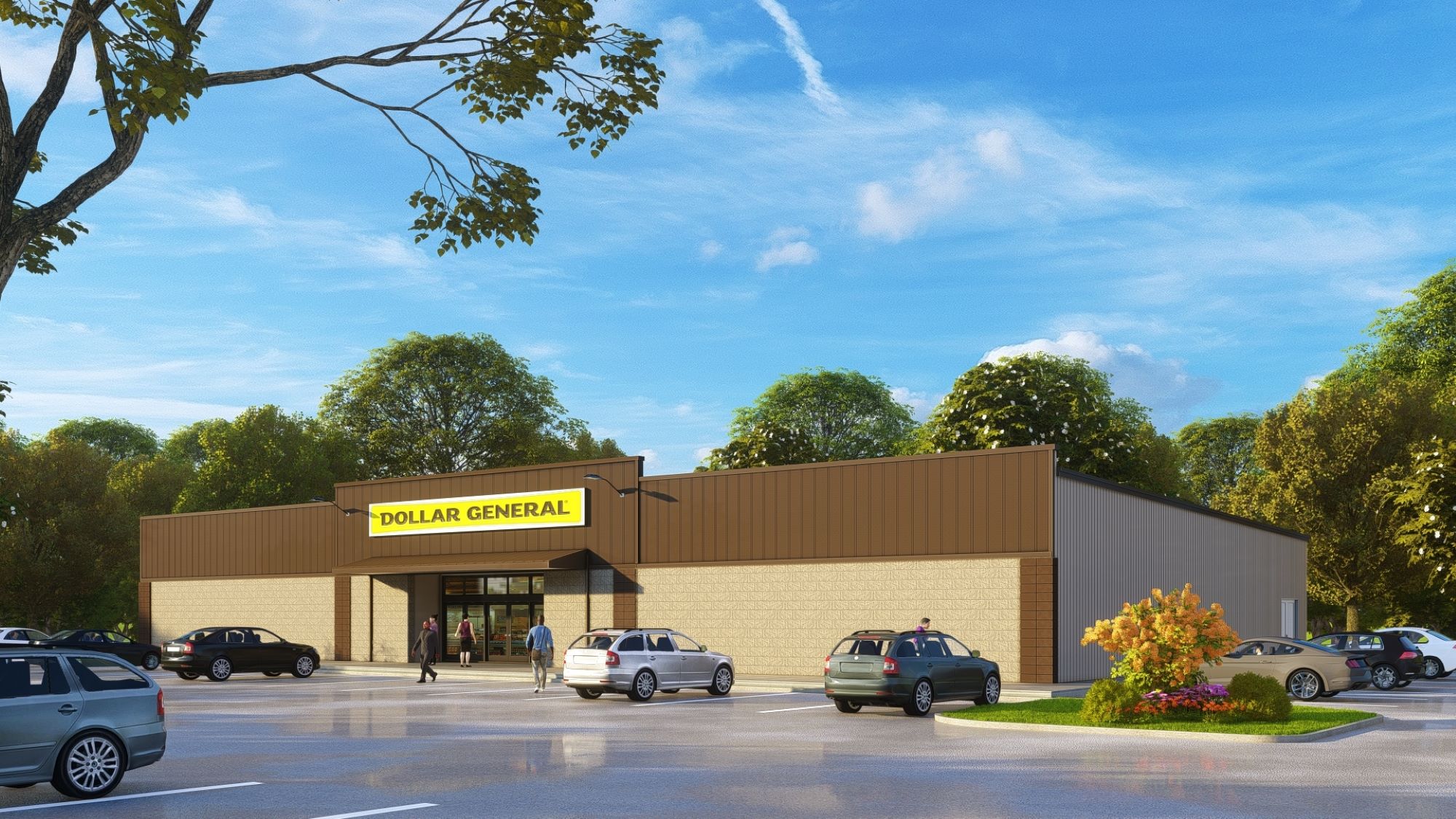
Looking to buy a Dollar General NNN property? 546 are observed for sale across 43 states, median asking cap rate 7.00%. View Dollar General NNN properties for sale, cap rate bands and the 1031 buyer guide.
| Metric | Details |
|---|---|
| Parent Company | Dollar General Corporation |
| Credit Ratings | S&P: BBB (Stable) / Moody’s: Baa3 (Stable) |
| Sector | Dollar/Discount |
| Locations | 21,148 (48 U.S. states and Mexico, July 31, 2026) |
| Median asking cap rate | See the live table below |
| Lease Term | Many stores have a primary term of up to 15 years with renewal options (Form 10‑K); confirm in the lease |
| Guarantee Type | Varies; confirm the tenant entity and any Dollar General Corporation guaranty in the lease |
| Stock Ticker | DG (NYSE) |
| Annual Revenue | $42.7B (fiscal 2025, ended Jan. 30, 2026) |
Bond vs NNN Comparison: See how Dollar General corporate bond yields compare to Dollar General NNN cap rates, with after tax math, depreciation impact, and 1031 exchange treatment. Dollar General Bonds vs NNN →
Dollar General Business Overview & NNN Investment Grade Profile
Dollar General describes itself as the largest discount retailer in the United States by number of stores, with 21,148 stores in 48 U.S. states and Mexico as of July 31, 2026 (Form 10‑Q), located in rural, suburban and urban communities (Form 10‑K). DG provides affordable retail merchandise ranging from consumables and seasonal items to home products and apparel.
Dollar General’s 10‑K says many of its stores carry a primary lease term of up to 15 years with multiple renewal options. Rent schedules vary, so confirm the rent and any increases in each lease.
Investors evaluating Dollar General NNN properties should focus on location quality, lease terms, cap rate entry, and the tenant’s credit trajectory. This analysis examines Dollar General’s credit profile, lease structure, market positioning, and investment considerations for 2026.
Dollar General Credit Rating Analysis
Source: S&P Global Ratings BBB, Stable, as of August 27, 2026; Moody’s Baa3, Stable, as of August 27, 2026. Ratings checked October 8, 2026.
Investors should monitor Dollar General’s quarterly earnings releases, cash flow generation, and any changes in credit outlook. Credit ratings are agency opinions of an issuer’s credit, not of a specific lease, so property location and lease terms remain critical evaluation factors; see the investment grade guide.
Dollar General NNN Lease Structure
Dollar General’s 10‑K says many stores, including a significant portion of its new stores, carry a primary lease term of up to 15 years with multiple renewal options, and some stores have shorter-term leases. On NNN and absolute NNN leases the tenant pays property taxes, insurance and maintenance; on NN leases the landlord keeps some responsibilities, such as the roof and structure, so confirm the lease type.
Rent schedules vary by lease, including whether rent rises during the primary term or only at each option; confirm the rent schedule. Renewal options are at Dollar General’s discretion.
Where a lease is guaranteed by Dollar General Corporation, the guaranty is a material factor in its creditworthiness. Confirm the tenant entity and guarantor in each lease. A guaranty protects against a tenant default, not against weak store sales.
Dollar General NNN Cap Rate & Pricing Trends
Live asking cap rates for Dollar General and comparable tenants:
| Tenant | S&P / Moody’s | Median asking cap rate | Middle half of listings | Listings | Median vs. 10-year Treasury |
|---|---|---|---|---|---|
| Dollar General | BBB / Baa3 | 7.00% | 6.60% to 7.75% | 535 | +176 bps |
| Dollar Tree | BBB / n/a | 7.34% | 6.75% to 8.00% | 84 | +210 bps |
| Family Dollar | B / n/a | 8.50% | 8.00% to 9.00% | 176 | +326 bps |
Active listings InvestmentGrade.com tracks with an asking cap rate (stated in the listing, or computed from its stated income and price when no rate is stated), listings last observed October 9, 2026. Asking cap rates are not closed-sale cap rates. The middle half is the range from the 25th to the 75th percentile of listings. The 10-year Treasury yield is 5.24% as of October 1, 2026 (FRED series DGS10). Ratings are the agency ratings in our ratings database for the entity shown, which may be a parent company; the rating type (for example issuer, senior unsecured debt, long-term debt or revenue bond ratings) varies by company and is shown on each tenant page. A rating applies to a lease only if the rated entity signs or guarantees it, so confirm the tenant and any guarantor in the lease. n/a means no verified rating is on file. Not shown because fewer than 3 active listings with a published cap rate were observed: Five Below.
Pricing for a specific property depends on the remaining lease term, rent level, location and lease guarantor. Asking cap rates are not closed-sale cap rates.
Dollar General Real Estate Footprint
Dollar General operated 21,148 stores in 48 U.S. states and Mexico as of July 31, 2026. The company’s footprint includes standalone and co-tenanted buildings serving essential retail and service categories. Its 10‑K says the greatest concentration of stores is in the southern, southwestern, midwestern and eastern United States.
Dollar General Growth & Expansion Outlook
Dollar General is slowing new store growth and putting more capital into remodels. It opened 589 stores in fiscal 2025, down from 725 in 2024 and 987 in 2023, and plans about 450 new U.S. stores (plus about 10 in Mexico) and about 4,250 remodels in 2026 (Form 10‑K and Form 10‑Q).
Dollar General NNN Investment: Pros & Cons
| Pros | Cons |
|---|---|
| 21,148 stores in 48 U.S. states and Mexico as of July 31, 2026 (Form 10‑Q) | Rural concentration and demographic challenges |
| Senior unsecured debt rated BBB/Baa3 by S&P and Moody’s | Uncertain tariff environment and pressure on lower-income customers |
| Many stores have primary lease terms of up to 15 years (Form 10‑K) | Competitive environment from other dollar chains |
| Leases may carry a Dollar General Corporation guaranty; confirm in each lease | Closed 290 stores in fiscal 2025 (Form 10‑K) |
Comparable NNN Tenants
| Comparable Tenant | Rating | Investment Grade Status |
|---|---|---|
| Dollar Tree | BBB | Investment Grade |
| Family Dollar | B | Below Investment Grade |
| Five Below | no verified rating | Not Yet Verified |
What is the credit rating of Dollar General?
Dollar General maintains credit ratings of BBB (S&P) and Baa3 (Moody’s). These are senior unsecured debt ratings (Form 10‑Q for the quarter ended July 31, 2026); whether they back a specific lease depends on who signs or guarantees it.
What are asking cap rates for Dollar General NNN properties?
Current median asking cap rates for Dollar General and comparable tenants are shown in the live table on this page. Pricing for a specific property depends on the remaining lease term, rent level, location and lease guarantor, and asking cap rates are not closed-sale cap rates.
Is Dollar General a good NNN investment?
It depends on the property and the lease. Dollar General Corporation’s senior unsecured debt is rated BBB/Baa3, but a specific property turns on who signs or guarantees the lease, the remaining term, the rent schedule and how well the building would suit another user. Careful property selection and location analysis remain critical.
What lease terms do Dollar General NNN properties have?
Dollar General’s 10‑K says many stores carry a primary lease term of up to 15 years with multiple renewal options, and some have shorter-term leases. Rent schedules vary, so confirm the term, options and any rent increases in each lease.
Dollar General Net Lease Property: Buying, Selling and Financing
Buying: We find on-market and off-market Dollar General properties, review the lease and the tenant’s credit, and compare pricing with current listings. On the majority of transactions, there is no separate fee to you as the buyer; the listing broker pays a cooperating commission.
Selling: We can prepare an opinion of value from current listings and recent sales and, when it fits your goals, run a confidential sale to private investors, family offices and institutional buyers. See our guide to off-market sales.
Financing: Investment Grade Capital, a service of Investment Grade LLC, matches buyers and owners with lenders for acquisitions and refinancing.
1031 exchanges: Tell us your identification and closing deadlines so we can plan the search around them.
Request an NNN investment consultation or email team@investmentgrade.com.
Related NNN Tenants
Compare Dollar General against current NNN cap rates
Before underwriting a Dollar General net lease, benchmark the asking cap rate against the broader 2026 NNN cap rates by tenant credit quality so the spread reflects both Dollar General credit risk and lease structure.
Dollar General NNN Properties Observed For Sale
546 active Dollar General net lease listings observed across public listing sources, most recently Oct 9, 2026. Asking figures as published by the listing party.
| Location | Asking Price | Cap Rate | Building SF | Term Left | |
|---|---|---|---|---|---|
| Sundance, WY | $1,730,000 | 6.90% | 9,209 | 9.3 yrs | View listing |
| CENTRAL FALLS, RI | $2,098,593 | 7.75% | 12,615 | n/a | View listing |
| Wilmington, DE | $2,435,953 | 8.50% | 9,100 | 3.8 yrs | View listing |
| Dover, DE | $1,600,000 | 7.16% | 9,100 | 7.0 yrs | View listing |
| Kenton, DE | $1,706,000 | 7.00% | 9,026 | 7.9 yrs | View listing |
| Viborg, SD | $2,147,385 | n/a | 10,640 | 15.0 yrs | View listing |
| New Rockford, ND | $1,061,475 | 8.00% | 9,100 | n/a | View listing |
| Minot, ND | $1,436,000 | 6.75% | 9,100 | 9.0 yrs | View listing |
Search all 546 observed Dollar General listings and the full NNN inventory
Market observations aggregated from listing broker materials; not offerings by Investment Grade Income Property, LP. Buyer representation available on a cooperating commission basis. Information deemed reliable but not guaranteed.
